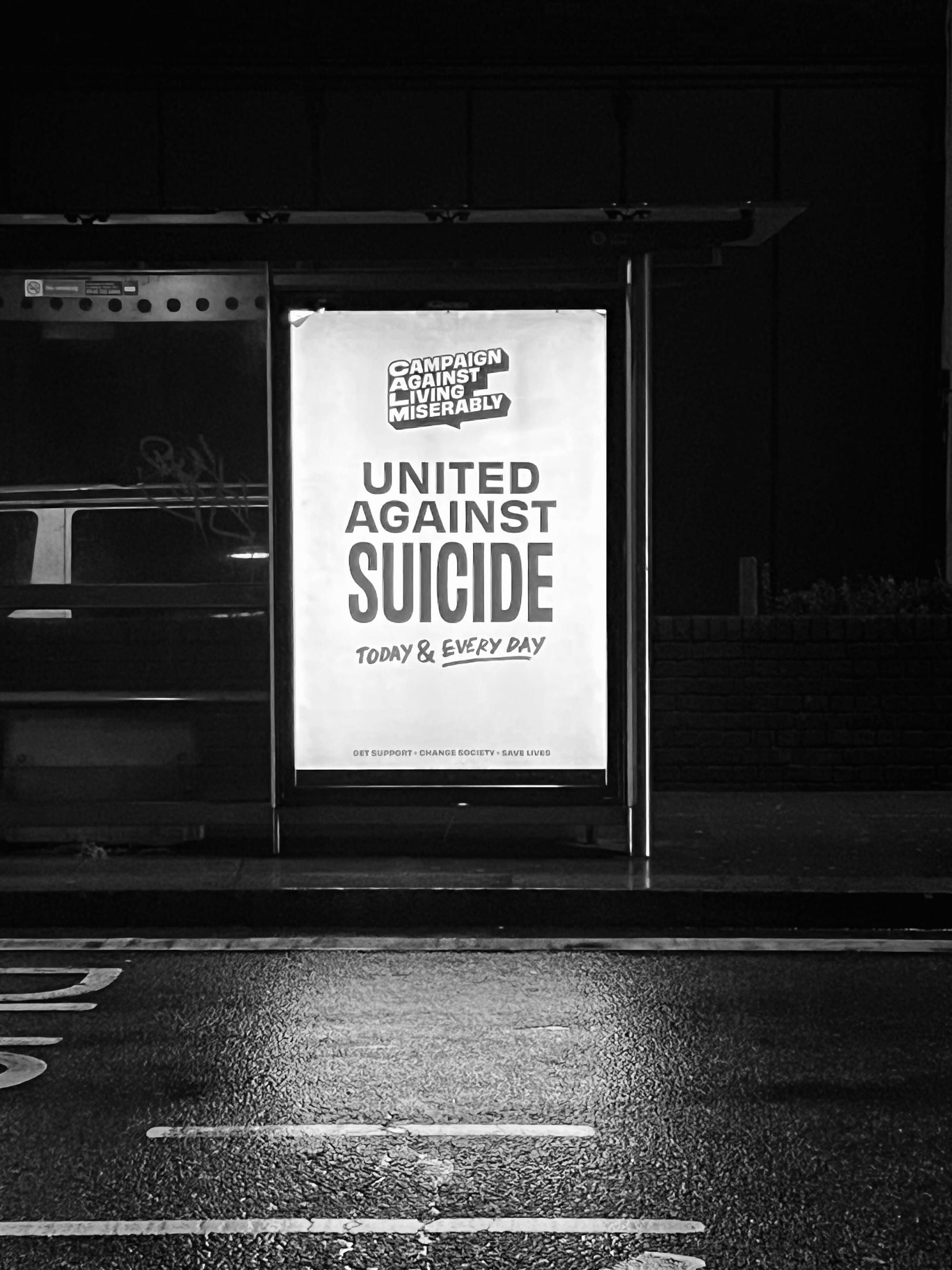
“Suicide prevention is about life and hope, and we need to make sure that people embrace it.”
Simon Gunning, Chief Executive Officer, CALM
Content note: This article discusses suicide and suicidal thoughts.
Every year on 10th September, World Suicide Prevention Day brings people together to raise awareness, challenge stigma and reinforce a vital message: suicide can be prevented. The 2026 theme, Changing the Narrative on Suicide, calls on all of us to start open, compassionate conversations and help create spaces where people feel able to seek support.
At Rough Trade, we believe music can offer connection, catharsis, community and, sometimes, a lifeline. That belief is at the heart of our partnership with Campaign Against Living Miserably (CALM), a suicide-prevention charity providing life-saving support and working to change the conversation around suicide. We’re proud to use our stores, platforms and music community to support CALM’s work, raise awareness and remind people that nobody should have to struggle alone.
The need for that work remains urgent. CALM reports that 125 people die by suicide every week in the UK and that suicide is the biggest killer of men under 50. Its figures also highlight the steep rise in suicide rates among young women under 24. Behind every statistic is a person, as well as their families, friends, colleagues and communities whose lives are changed forever.
For World Suicide Prevention Day, we spoke to CALM CEO Simon Gunning about the progress still needed, the pressures facing young people and those working in music, the role artists can play, and how each of us can reach in when someone may be struggling.
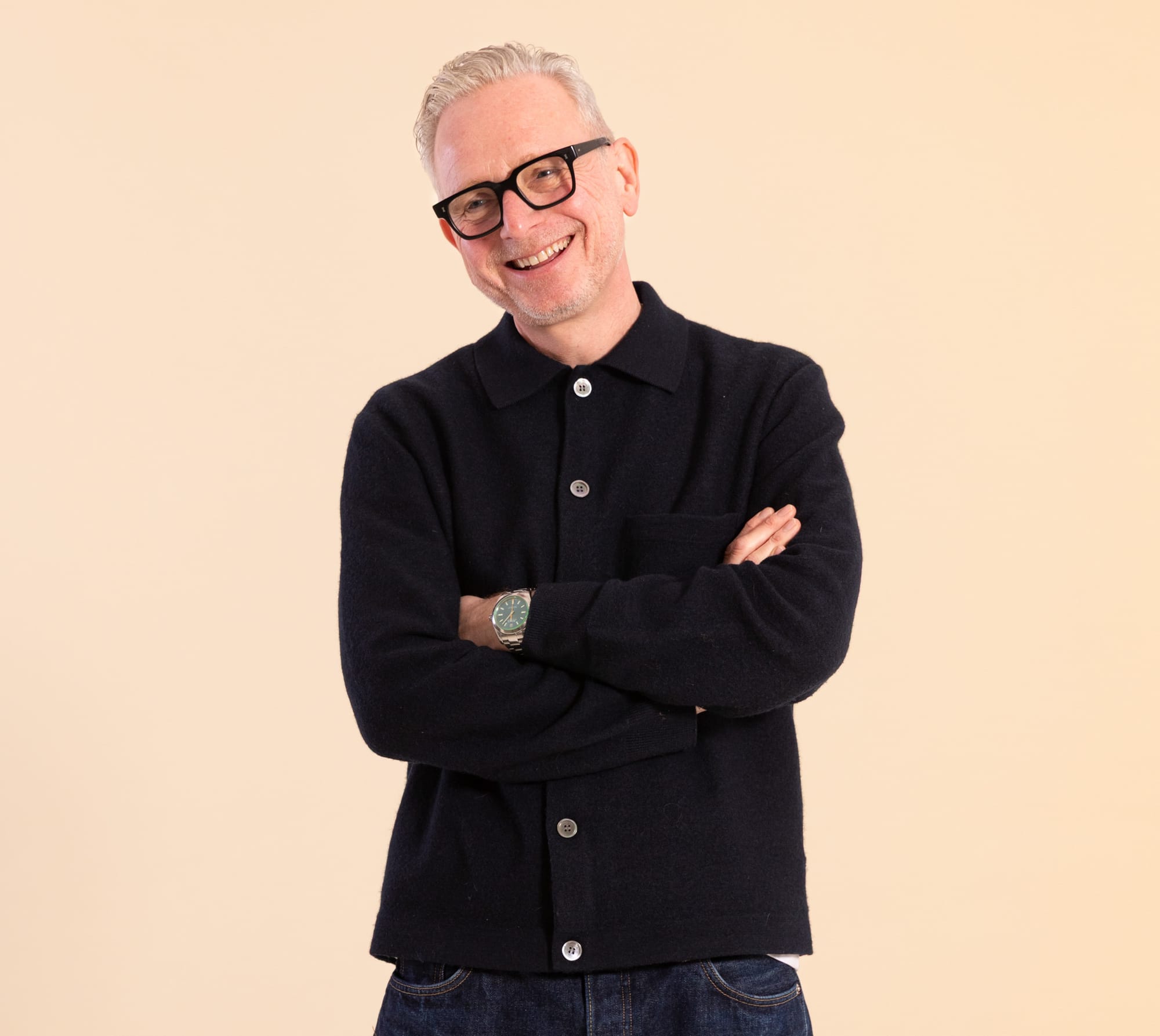
Over the past decade, conversations around mental health have become far more open, thanks in no small part to organisations like CALM. Sadly, suicide remains one of the UK's biggest public health challenges. Where have we made meaningful progress, and what do you think still needs to change most urgently if we're to prevent more lives being lost?
It’s true we’ve made progress on mental health. It really is much more acceptable across large parts of society for people to speak openly about their mental health, seek help and be taken seriously in doing so. Sadly, this isn’t always the case and there still is a deep underlying trend towards trivialisation and scapegoating. Where we haven’t seen progress, however, is in suicide prevention. The whole area of suicide and its prevention is shrouded in stigma and shame and that is the fundamental change we need to make. Suicide is horrible, around 6,500 people die by suicide each year, one in four of us will have suicidal thoughts and one in 13 UK adults will attempt to take their own life. These aren’t other people; they’re our mums, our dads, our brothers, our sisters, our loved ones, our colleagues and our mates.
We need to profoundly change attitudes towards suicide prevention. We need to make it a social behaviour that we voluntarily adopt for ourselves and for the people that we care about. Suicide prevention is about life and hope and we need to make sure that people embrace it.
"The glaring misconception around suicide is that it’s a linear process. We feel great, then a bit rubbish, then totally shit, then we attempt suicide. It's not like that."
Many people assume the darker winter months are when suicide rates are highest, yet the statistics point towards summer. Why is that, and what misconceptions do we still have around suicide and seasonal mental health?
The most likely explanation centres on comparison. We're expected to embrace warm weather, go on picnics, and host lavish barbecues. This isn't the case for many, or even most, people. Comparisons can be very hard to take when we don't appear to measure up. The glaring misconception around suicide is that it’s a linear process. We feel great, then a bit rubbish, then totally shit, then we attempt suicide. It's not like that. It can come out of nowhere or fester for years. And it's not one-and-done. Someone may attempt or ideate in early life, recover and then do it again in later life. The good news is that survival is the overwhelmingly likely outcome and that by using the CALM C.A.R.E. Kit we can all intervene and look after each other, in good times and bad.
From comparison culture and online abuse to the pressure of always being available, are there particular digital behaviours or habits that concern CALM the most?
What concerns us most is not digital life in itself, but the point at which it starts to make people feel worse about themselves, more isolated or more trapped. Comparison culture, online abuse and the pressure to be constantly available can all chip away at self-worth and belonging. For someone who is already struggling, being repeatedly exposed to other people’s apparently perfect lives, hostile comments or the sense that there is no escape from what is happening online can intensify feelings of failure, shame, rejection or hopelessness.
We are also concerned about the loss of an “off switch”. Constant checking, scrolling late into the night, feeling obliged to respond immediately, or being pulled towards content that reinforces how you are already feeling can leave very little space to recover or regain perspective. The question for us is less “how much screen time is too much?” and more: what is this digital behaviour doing to the person? Is it helping them feel connected, supported and more in control — or is it making their world feel smaller, harsher and harder to escape from?
Young people are often more open when talking about mental health than previous generations, but many still struggle to reach out in moments of crisis. What needs to change to bridge that gap?
It's a cultural thing. We've got to shift stigma away from suicide prevention. When one in four of us will have suicidal thoughts we need to understand that it's a part of the human condition. What's more, it's the most preventable cause of death, so we need every adult in the UK to understand, and be willing and able, to confront suicide.
It's also a huge thing to expect someone struggling to reach out. We need to be better as a society at reaching in, which means asking, rather than waiting for someone to tell us they need help. We know that can feel like a scary thing, which is why we're developing a host of practical tools, including our Conversation Coach, to help people practise those conversations.
Music has always been a source of connection, comfort and community, but the industry can also be very demanding and unsteady. Are people working in creative industries particularly vulnerable to poor mental health and suicide risk?
Yes. Making music, like comedy and art, is massively exposing. The artist is baring all for a critical audience. That's hard and self-belief can only get you so far.
Being a musician is a profession that carries one of the highest suicide rates, and I know this is something the industry is keenly aware of and looking to change with organisations like Help Musicians UK.
"...artists are already playing a huge part in suicide prevention for their fans that they might not be aware of, but we're looking to work with the industry to bring this superpower out into the open."
Throughout history, music has given people a language for emotions that can be difficult to express. Do you think artists and musicians have a unique role to play in encouraging conversations around mental health?
Without a doubt. Suicidal thoughts are part of the human condition. We are the only species with massive frontal lobes that have given us language, co-operation and a tendency to question our place on the planet. It's given us existential philosophy, existential poetry, and The Cure. Great music can evoke great emotion — joy (Fontaines D.C.), anger (IDLES) and melancholy (I’m going with Elliott Smith here).
Where we step in as CALM is the power of music as a tool for suicide prevention. So many people will tell you that a song or an artist saved their life, and there's evidence out there that suggests that might actually be the case. Having a ticket to a gig can be the reason a person decides to stay, and there's fascinating research into the impact music has on the brain to actually regulate it during moments of crisis. The fact is, artists are already playing a huge part in suicide prevention for their fans that they might not be aware of, but we're looking to work with the industry to bring this superpower out into the open.
Music can be a safe place, a refuge and a life-affirming stimulant to get the fuck up and do something.
For someone who worries a friend, colleague or loved one might be struggling, what's the most important thing they can do? And just as importantly, what shouldn't they do?
Don’t avoid the S-word (suicide). Don’t avoid really asking how they're doing. Do visit thecalmzone.net, do use the NHS and listen to lots and lots of varied music. It will nourish your soul.
If You Need Support
If you’re struggling, worried about someone or have lost someone to suicide, CALM is here. Call the CALM helpline on 0800 58 58 58 or use its webchat from 5pm to midnight every day.
You can also call Samaritans free on 116 123, 24 hours a day, 365 days a year. If you or someone else is in immediate danger, call 999 or go to A&E.
Useful Links / Further Reading
Rough Trade Partners with Campaign Against Living Miserably (CALM)
Money and Mental Health
How To Get Through Summer
Tom Walker - Everyone Has a Lifeline
Nadine Shah on Suicide
The Snuts and Mental Health in the Music Industry