
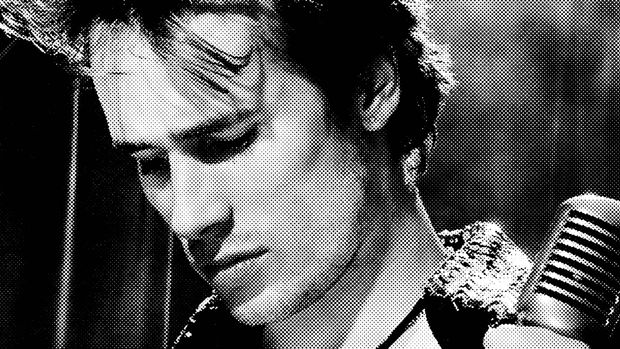
“Music is my mother and my father; it is my work and my rest...my blood...my compass...my love...”
Jeff Buckley, May 1994
From the towering title track of Grace to intimate covers and unreleased collaborations, Jeff Buckley left behind a remarkably rich body of work. Rough Trade's Cammy Todd pulls together 15 essential releases and performances that capture his songwriting, interpretive brilliance and extraordinary vocal range.
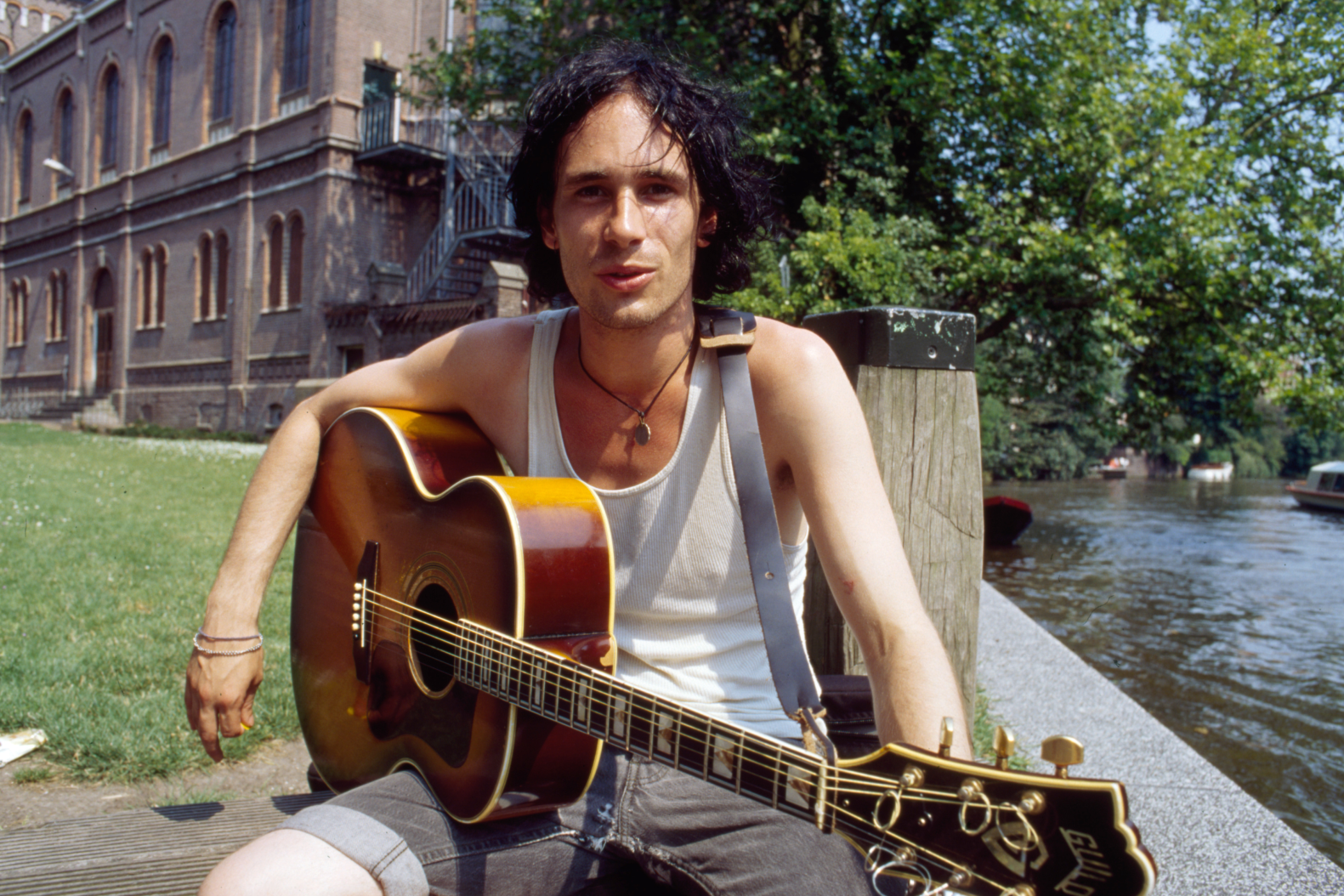
Jeff Buckley was born on the 17th of November 1966 in Orange County, during a historic meteor shower. He lived for 30 years, only releasing one studio album, which just so happened to be one of the most powerful and momentous pieces of musical work ever created. Speaking to a heartache so universal, through rich and vulnerable lyrics, he was a truly special human being possessing a generational talent. His musical DNA was built block by block through immersion in the works of some of the greats: Nina Simone, Patti Smith, Bob Dylan, Led Zeppelin, Joni Mitchell and, most importantly, Nusrat Fateh Ali Khan, a master of Qawwali whom he called his Elvis. These figures taught him important lessons on how he should use his music to impact people.
“Music should be free, should be penetrating, should carry you.”
In no particular order, and through a fair amount of discomfort, I have compiled a list of the 15 greatest Jeff Buckley songs, spanning his only studio album, his live albums, unreleased demos and covers. Join me in celebrating the life and music of a singular musician who has touched the lives of so many people.
Hallelujah
Grace (1994)
The entry point. Soaring vocals and guitars that swell and crescendo, the track takes you on a journey and is the perfect place to first meet Jeff Buckley’s powerful, vibrato-laden falsetto. Buckley has the ability to not only completely change the meaning of a song, but make it better. My introduction to his music was, as I’m sure it would be with many people my age, through this Leonard Cohen cover. I had planned to enter my primary school talent show with my own rendition, but as I, my poor mum, and probably the neighbours, shortly discovered, I had not been blessed with the same vocal range as him, and could not hit the fourth, nor fifth and especially not the major lift.
Mojo Pin
Grace (1994)
Possibly one of the best album openers ever and the perfect welcome to Buckley’s musical world. The track began as an instrumental written by Gary Lucas, a previous bandmate who Buckley met at a tribute concert for his father, Tim Buckley. After the show, Lucas mailed him a copy of this track, which was then called And You Will. Buckley immediately began writing lyrics, which were inspired by a dream of a woman shooting heroin between her toes, with Mojo Pin a metaphor for a needle. Huge jagged guitars and a wash of dreamlike language mirror the disorientation of addiction, whether that be to a substance or a person. No matter how many times you play it, it never fails to give goosebumps.
Grace
Grace (1994)
“Grace is what matters… It keeps you from reaching for the gun too quickly, keeps you from destroying things too foolishly. It keeps you alive and it keeps you open for more understanding."
Another track co-written with Gary Lucas. Inspired by a rainy farewell with his girlfriend Rebecca Moore, nobody does melodrama as well as Jeff Buckley. With so many details and layers, you're wrapped up in this song from start to its ululating finish.
So Real
Grace (1994)
This track was the replacement for Forget Her, which Buckley deemed not complex or daring enough for the vision he had for Grace. Recorded in a single, spontaneous take, So Real morphs hazy and dreamlike elements with the intensity of alternative rock. Built on clash-and-resolution guitar chords and an electric piano line, the song explores the thin line between love and paranoia. It’s an important track to understand Buckley’s stylistic direction and his willingness to embrace jagged, avant-garde textures. The quiet “I love you” after the huge, crashing guitars is one of my favourite moments across the entire album (even if it is ever so slightly cheesy).
All Flowers in Time Bend Towards The Sun
Unreleased (1994-5)
An unreleased demo featuring Buckley and Elizabeth Fraser of Cocteau Twins, recorded while the two were in a relationship. Unpolished and intimate, it captures a fleeting and beautiful moment that hints at what could have been and is enough to make anyone ugly cry. Without the layering and distortion typical of Cocteau Twins tracks, you can hear the rawness of Liz Fraser’s haunting vocals with frisson-inducing clarity. It’s a poignant listen, complicated by Fraser’s feeling that it was too private for public ears. One of my favourite songs never released and a testament to the power of music.
Further listening: Jeff Buckley’s solo live version in Australia in 1996.
Dido’s Lament
Unreleased (Meltdown Festival)
Jeff Buckley had no classical music training, so when he stepped out at Elvis Costello’s Meltdown Festival to perform Dido’s Lament, an incredibly challenging aria typically reserved for female sopranos, you can only imagine the reactions in the room. At the end of the recording you can hear Costello announce, “as one of the vocalists performing this evening, I can tell you that none of us want to sing next.” The breadth and depth of Buckley’s talent will forever be unparalleled.
Lover, You Should've Come Over
Grace (1994)
“It's never over
All my blood for the sweetness of her laughter
It's never over
She’s the tear that hangs inside my soul forever”
As Jeff Buckley’s undisputed masterpiece and best-known track, this was my re-entry point into his world, singing/screaming along to it whenever drunk with my uni course mates. No matter how many times you hear it or how obvious it might feel now, it is still possibly the most devastatingly gorgeous song ever written. Over six and a half minutes, building from quiet acoustics into a gut-wrenching lament for a lost love that's too late to recover.
I Know It's Over
You and I (2016)
Jeff Buckley and The Smiths meet at the intersection of music to cry over your failed 'situationship'. Emphasis on “it never really began”. Sometimes I think that the discovery of this song is almost to the detriment of every tragic romantic.
Eternal Life
Grace (1994)
This politically charged track allowed Jeff Buckley to release the anger he had towards historic and current atrocities, systemic injustices and corruption. Furious and much heavier than the rest of Grace, Eternal Life is Zeppelin-tinged, gritty and criminally underrated.
Lilac Wine
Grace (1994)
Another diamond in Jeff Buckley’s expansive repertoire is his cover of Lilac Wine. Although originally written and composed by James Shelton in 1950, it was popularised by one of his heroes, the great Nina Simone. Hushed breathy vocals that make it sound like he’s on the verge of tears brings a new level of sadness and melancholy. If you’re in need of a good old cry then put on the Netflix adaptation of One Day. The Lilac Wine needle drop is a cruel addition to an already devastating scene.
Everybody Here Wants You
Sketches For My Sweetheart The Drunk (1998)
Recorded during the sessions for Sketches for My Sweetheart the Drunk, Everybody Here Wants You is arguably the sexiest entry in Buckley's catalogue. Blending soulful R&B grooves with a hypnotic, minimalist bassline and lush vocal harmonies, it’s a teaching on lust versus love. It’s an insight into the soul-influenced direction he was exploring and a hint at where he might have gone with his music.
Strange Fruit
Live at Sin-é (1993)
A vocal advocate against violence and atrocities, Buckley chose to cover this song originally written by Abel Meeropol to protest the lynching of African-Americans and famously recorded by Billie Holiday. Another concrete example of his ability to breathe new life into any song, with the seven-minute-long track opening with an electrifying blues solo.
Further listening: New Year’s Prayer, which was inspired by the original poem that Buckley also performed this evening and is one of my favourite poems ever written.
Dream Brother
Grace (1994)
Dream Brother was written for Buckley’s friend Chris Dowd, urging him not to leave his pregnant girlfriend, in an attempt to break the cycle of abandonment. The emotion felt in this track is tied to Buckley’s own upbringing, as his father left his mother before he was born. He uses this song not only as a way to warn his friend, but also as a medium through which to release some of his own childhood trauma.
Morning Theft
Sketches for My Sweetheart the Drunk (1998)
My favourite track on Sketches for My Sweetheart the Drunk, this melancholic and poignant song is widely believed to reflect his brief yet intense relationship with Elizabeth Fraser.
Last Goodbye
Grace (1994)
"Kiss me out of desire baby, not consolation"
The third track on Grace, this is Buckley at his most accessible, but it doesn't detract from how great the song is. An immediate way into his music without losing any of the emotional complexity. It will always be a classic.
“I have no advice for anybody; except to, you know, be awake enough to see where you are at any given time, and how that is beautiful, and has poetry inside. Even places you hate.”
Jeff Buckley to Luisa Cotardo via The Marginalian.
Jeff Buckley left behind too little music for any list to feel complete, but perhaps that is why these recordings are so special. Every demo, cover and live performance offers another glimpse of an artist still becoming, and of the many directions his music might have taken.