
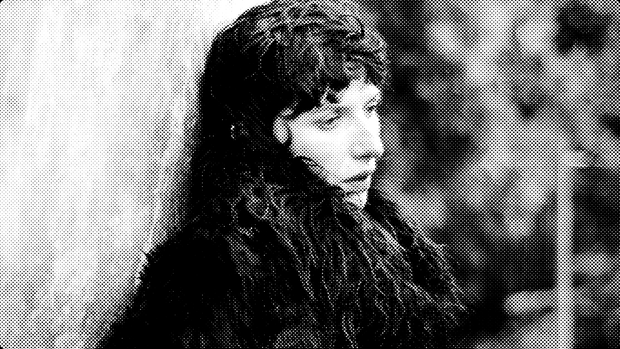
"Aldous Harding has spent a decade confounding audiences, unsettling critics, and producing some of the most genuinely original music of the twenty-first century. With Train on the Island, she has made the case; decisively; that she belongs among the all-time greats."
The artist nobody can explain and nobody can forget.
Rough Trade Director Stephen Godfroy traces Aldous Harding’s journey from Rough Trade lunchtime sets to global stages, exploring how her uncompromising vision makes her one of contemporary music’s most quietly transformative figures today.
The New Zealand enigma delights fans in May 2026, returning with her latest dreamlike offering, her fifth album Train on the Island on longtime label home 4AD, a ten-track collection reestablishing Harding's fascinating and emotive songwriting craft.
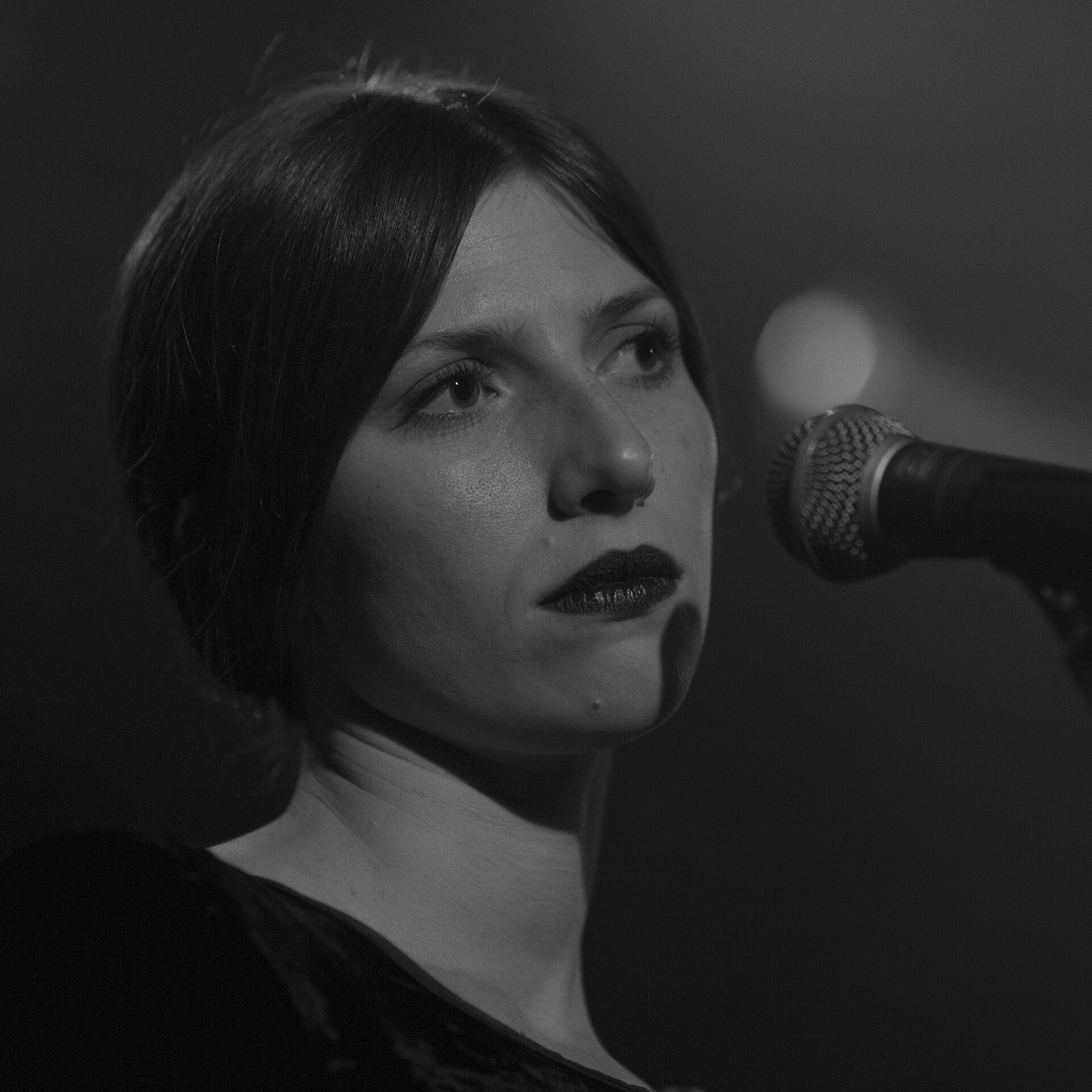
Words by Stephen Godfroy
The Point
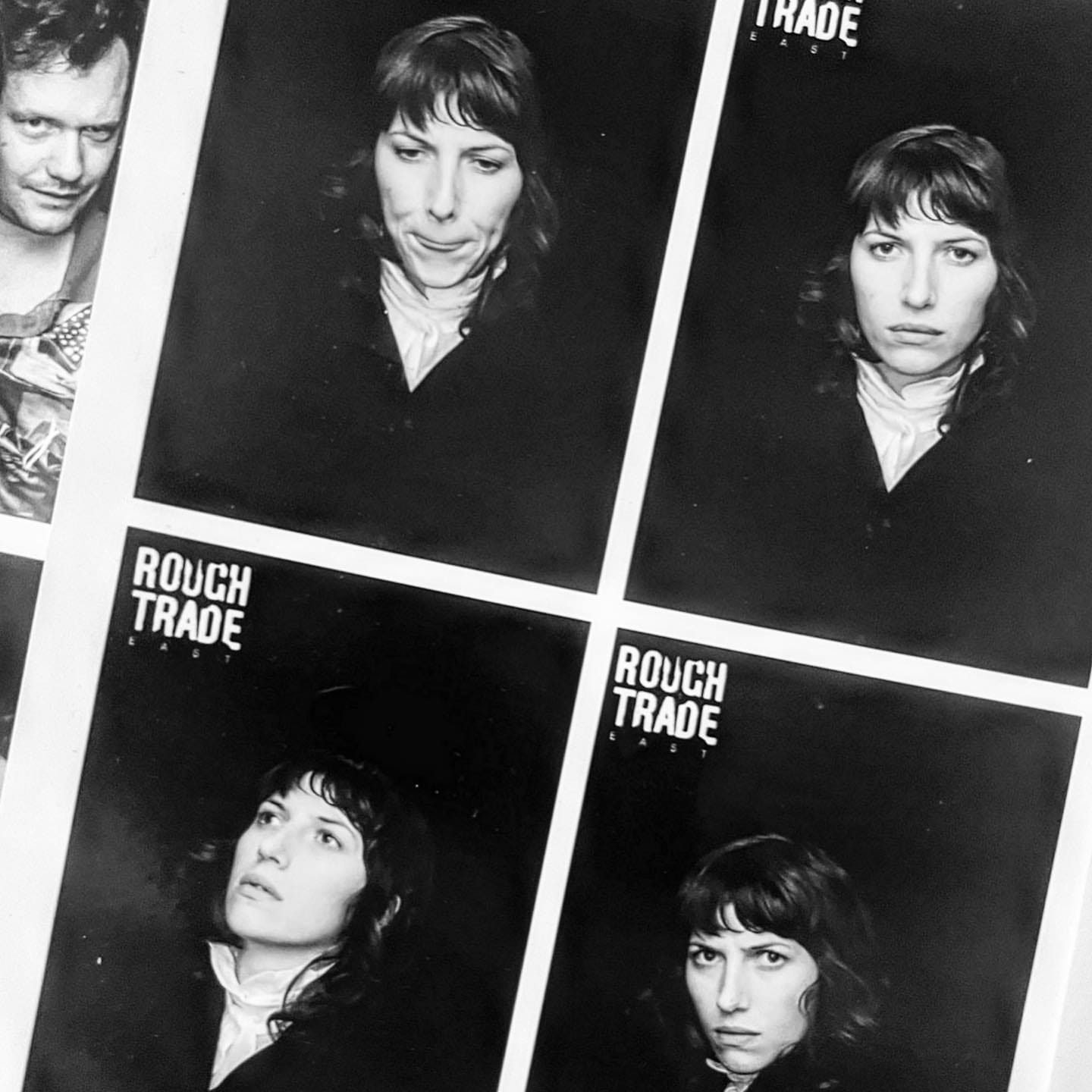
There is a particular kind of experience that only the very best artists can produce: a discombobulating, almost frantic neural attempt to process something your brain has no existing category for. Not discomfort exactly; more like the sensation of reaching for a familiar handhold and finding only air. I felt it the first time I saw Aldous Harding perform, at Rough Trade East, 23rd of October 2015. Before she played, I remember seeing her browsing the racks. Unnoticed, unknown, unassuming, and yet distinctly herself. There was an awkward confidence about her, something that didn't quite fit any obvious category, even standing there flicking through records like anyone else. Then it was one o'clock, and she was alone on a small stage with an acoustic guitar: thirty minutes, six songs drawn almost entirely from her self-titled debut. The doors were open; people had wandered in off Brick Lane to browse records and found themselves, without quite knowing how it had happened, standing completely still. Rough Trade East is not a hushed space. It was a busy lunchtime in East London, the shop full of people; office workers, browsers, passers-by; the kind of crowd with no particular reason to stop and listen. She silenced it. Not through volume or dramatic gesture, but through some quality of concentrated attention that made noise feel impossible, almost rude. When she fumbled a chord, which she did, occasionally, in those days; she'd curse quietly under her breath, and the small crowd would exhale into laughter, the tension briefly released before she pulled it back in. People came in for a casual browse and shop, and left changed.
By September 2017, she had made the leap to the Bowery Ballroom, one of New York's most celebrated mid-sized venues, a place where careers are confirmed. She had already signed to 4AD and released Party to widespread critical acclaim. Her Jools Holland performance of Horizon circulated indie circles; people had come specifically to witness the theatricality, the stare, the physicality they had read about and watched on their screens. Lorde had been praising her publicly. Perfume Genius, who sang on Party, had taken her on tour. In the tight-knit New York music world of that moment, the Bowery Ballroom show was a must-see event. The room was full of people who considered themselves exactly the right audience for Aldous Harding.
And still they didn't know what to do with her. These were not casual passers-by baffled by something outside their frame of reference. These were engaged, sympathetic, well-briefed listeners, and even they shifted in their seats, laughed in the wrong places, fell into an uneasy silence that was neither appreciation nor rejection but something more unsettled than either. The contorted postures, the vowels bent out of recognisable shape, the presence so intensely and privately focused that the fourth wall simply ceased to exist; it exceeded what even her most ardent supporters had prepared themselves for. Some people left. The room, for all its foreknowledge, did not know what to do with her.
This wasn't a failure of communication. It was the point.
"For me, Designer is one of the great art-pop records of the last decade. It operates in the space between performance and song, between sincerity and irony, between the domestic and the surreal; and it holds that space without flinching"
The Arrival
Harding had always been remarkable. Her first two records, the self-titled debut and Party, announced an artist of serious and unusual gifts: a songwriter with an instinct for melody that felt both ancient and unclassifiable, a voice that could turn on a pin from lullaby warmth to something approaching menace. At Rough Trade, we chose Party as our Album of the Year 2017. But this is about more than a single accolade. Aldous Harding is, to my mind, the embodiment of everything that inspired the creation of Rough Trade East and the spirit of its most provocative, iPod-defying early years; a petri-dish for artist and audience intimacy, forward-leaning into a vision that gleefully experimented and challenged expectation. That same spirit has carried through every Rough Trade store opened since: a commitment to remaining a place of unpredictable discovery, where the next Aldous Harding might be browsing the racks before stepping up to silence the room. She is not just an artist we champion. She is the reason stores like ours exist. But what came next was even better. It was 2019's Designer that marked the real arrival; the album on which she seemed to discover, fully and without apology, what she actually was. She played at our Brooklyn store that year too; now sadly closed, but in its time a fabled outpost of everything Rough Trade stood for. Seeing her there, in that space, felt entirely right.
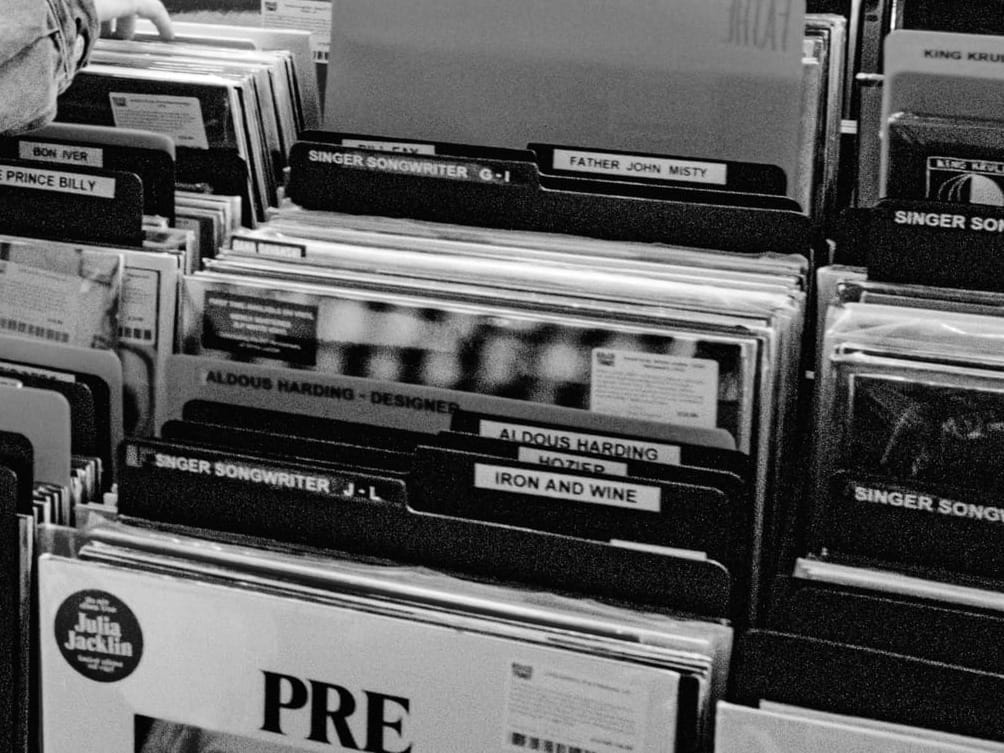
For me, Designer is one of the great art-pop records of the last decade. It operates in the space between performance and song, between sincerity and irony, between the domestic and the surreal; and it holds that space without flinching; tracks like The Barrel and Pilot feel like transmissions from a consciousness that processes the world according to rules that are entirely its own: oblique, funny, unsettling, and finally moving in ways that are hard to account for rationally. Critics reached for Kate Bush comparisons and weren't wrong to, but they weren't quite right either. There is nobody who sounds quite like this.
What Designer confirmed was something that is rare enough in contemporary music to feel so utterly, genuinely precious: a total aesthetic coherence, the sense of an artist whose every creative choice, the arrangement, the phrasing, the physical performance; emerges from a single, irreducibly personal vision.
The Voice
To understand what makes Harding extraordinary, you have to pay attention to something that very few artists explore with any real intention: the relationship between melody and voice; not just timbre and tone, but the actual phonetic stuff of speech. Most singers, when they sing, lose their accent. Melody tends to flatten vowels into whatever shape the tune demands. Harding has spent years moving in the opposite direction, shaping her melodies around accent, letting the cadences and intonations of spoken language determine the form the music takes.
It’s not a stylistic quirk. It is a compositional principle, and it has unlocked something elemental in her song craft. On Warm Chris,; an album I think history will judge more generously than it sometimes has; she sang with vowels rounded and shaped by her adopted Wales, where she has long made her home, a close-lipped muscularity that carried her somewhere playfully surreal, the songs feeling less like conventional pop structures than like physical objects shaped by the body making them. A New Zealander absorbing the cadences of another place entirely, and making something new from the friction.
On Train on the Island, she takes this further still. The opening single One Stop moves through a whole wardrobe of accents and modes of character-acting, each transition so fluid it barely registers as a transition at all. She has always been a performer who acts through song rather than merely delivering it; now the acting and the songwriting have become inseparable. The song feels, as one critic put it, as though she is inventing the form from scratch; time signatures discarded, queasy piano lines flickering beneath the surface, disparate parts held in an astonishing balance that somehow feels seamless.
There is a quality in her best work of pure, unguarded strangeness; the private face we make at ourselves in the mirror, the 'talking to yourself out loud’ accent we slip into once the elevator door closes. She has made a body of work from precisely what most people take care to hide.
Note to Self
What Harding does in performance has no obvious precedent in the singer-songwriter tradition. The bodily commitment, the deliberate physical extremity, the sense that she is wholly inside something private even in front of a full house; these feel like the natural outward expression of how she actually processes music. The performance and the song are inseparable. One is the other.
A recent Pitchfork review of One Stop described it well: "she accesses the strange, playful part of being alive; the unselfconsciousness of a child, or of someone entirely alone, moving through pure feeling, compelled by some private tic", in a culture of relentlessly curated, market-conscious artistic personas, this is not merely unusual. It is almost radical. She makes music that feels as though no one is watching, even when thousands are.
It is, paradoxically, the very quality that makes her difficult to sell. Labels and publicists understand how to package vulnerability, how to frame quirkiness as a brand. What they do not know what to do with is genuine strangeness; strangeness that cannot be reduced to a pitch, that has no obvious analogue in the existing market. That Harding has built the audience she has built, entirely on her own terms, is its own remarkable achievement.
"The worst thing that could happen to Harding would be for the world to decide, loudly and publicly, that she is a genius. The pressure to perform genius, to deliver it on schedule, is the enemy of the conditions in which genius actually grows."
Nylon Thread
It really struck me, the contrast between that Bowery Ballroom show in 2017; the nervous laughter, the baffled exodus; and seeing her at Webster Hall in 2022, where the audience was in something close to raptures. Same city, five years apart, different world entirely. The difference was not that Harding had become more accessible, more legible, more willing to meet the crowd halfway. She had not softened a single edge. The difference was that the audience had learned to listen.
This is how it works with artists of genuine originality: not that they move toward the mainstream, but that the mainstream, slowly, shifts in their direction. It takes time. It takes the kind of patience that the music industry; increasingly structured around immediate algorithmic returns; is institutionally incapable of providing. That it has happened for Harding at all is a reminder of what devoted, word-of-mouth audiences can still accomplish, along with the critical importance of independent labels approach to artist development.
But here is the caveat, and it matters: a certain kind of recognition can be as dangerous as obscurity. The qualities that make Aldous Harding extraordinary; the privacy of her vision, the genuine not-giving-a-damn about palatability, the sense that she is making music for reasons that have nothing to do with how it will be received; these are qualities that excessive cultural validation has a way of quietly eroding. The worst thing that could happen to Harding would be for the world to decide, loudly and publicly, that she is a genius. The pressure to perform genius, to deliver it on schedule, is the enemy of the conditions in which genius actually grows.
"It is the album on which all the threads of her work converge: the vocal theatrics and the phonetic experimentation, the surrealist comedy and the genuine emotional weight; the sense of a sensibility so particular and so consistent that it can only be described as a world."
True Greatness
Which brings me to Train on the Island, and the problem of writing something like this. I’ve been fortunate enough to have played the album pretty much daily for the past eight weeks; familiarising, peeling back, learning and discovering with each listen. There is so much to enjoy. It has become a kind of daily musical vitamin shot, something that genuinely boosts my mood and my mental health in a way I can't entirely explain but have stopped trying to. Because the new record is, I think, astonishing; more fully realised than anything she has made, more daring, stranger, funnier, and ultimately more moving. It is the album on which all the threads of her work converge: the vocal theatrics and the phonetic experimentation, the surrealist comedy and the genuine emotional weight; the sense of a sensibility so particular and so consistent that it can only be described as a world.
John Parish, who has produced every one of her 4AD albums; Party, Designer, Warm Chris, and now Train on the Island, all recorded at Rockfield Studios in Wales; is by this point less a hired producer than a genuine creative partner. The relationship resembles those rare long-term collaborations, like Nigel Godrich and Radiohead, where producer and artist have developed a shared language so deep that it is impossible to imagine the work without it. Parish has found a sonic world that both supports and challenges her; the arrangements spare enough to let the voice dominate, but strange enough in their own right to push her into new territory.
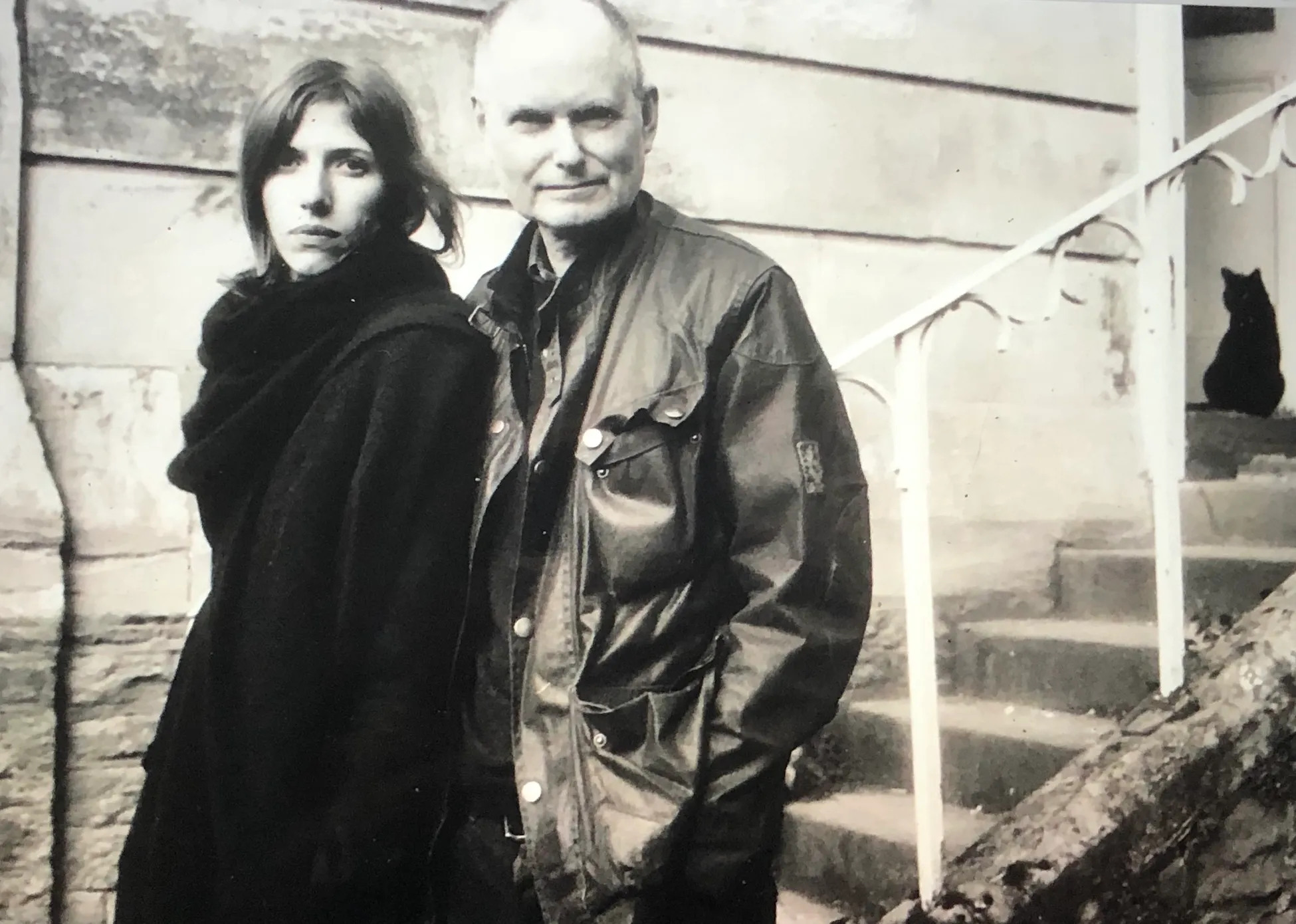
Is she the most important music artist alive today? The claim risks the very thing I have just cautioned against: it turns a person into a monument. But importance, understood rightly, is not about monuments. It is about what an artist is actually doing that nobody else is doing, about the particular absence that would exist in music and in culture if they were not there. By that measure, the case for Aldous Harding is overwhelming. She is expanding what a song can be, what a voice can do, what performance means. She is doing it entirely on her own terms. And she is doing it, right now, better than anyone.
On that night at the Bowery Ballroom when the crowd didn't get her, she did not adjust, did not explain, did not reach for easier ground. She simply continued. That stubbornness; that absolute commitment to the private thing, even in a public space; is what makes her irreplaceable. It always has been. Train on the Island is released on May 8th 2026. She returns to New York this September, playing Brooklyn Steel; and for me, there’s something fitting about that. She first played our Rough Trade Brooklyn store in March 2017, and again in 2019. That store is gone now, replaced by something that raised a few eyebrows: Rough Trade Above and Below, two new spaces in the heart of Manhattan. A controversial relocation by some reckonings; indie record stores planting a flag in decidedly non-indie territory. And that is exactly the point. You don’t compromise what you stand for by reaching a larger audience. You don’t become mainstream by refusing to behave like it. Rough Trade in Manhattan is the same Rough Trade it always was, just further into unfamiliar territory. I’d like to think Aldous would understand that instinctively. I also hope she finds time to play Rough Trade Below later this year. If you can get a ticket, do not think twice.